
My name is Adrian Cowell, I have been shoeing horses for over thirty-five years. Prior to becoming a professional farrier, all of my experience with horses was in rural areas, including time spent in WA in Kimberley stock camps.
Upon entering the world of professional farriers, I noticed that there is a huge disparity in the availability of knowledge between ”city farriers” and those using horses for work in rural and remote areas, so when the opportunity arose to start travelling to these areas to share my knowledge and experience, I leapt at the chance.

I began travelling to cattle stations in the Pilbara WA to conduct shoeing schools in 2018, and since then, have gradually built a run that now includes the Gascoyne, Pilbara and Kimberley regions of WA, as well as remote areas in NT and QLD.
For me, the schools are more than just a job. I see huge value in showing people how to shoe a horse correctly, with regard to the longterm soundness and wellbeing of the horse.
Mostly, we run with a two-day format; occasionally three, depending on each stations’ requirements.
If you are a station with a smaller number of staff requiring training and would like to get together with your neighboring stations, I am also happy to do a combined school.
If your horses don’t require shoes, the school can focus on trimming only.
Hot-shoeing schools for those who are ready for more advanced skills are also available.
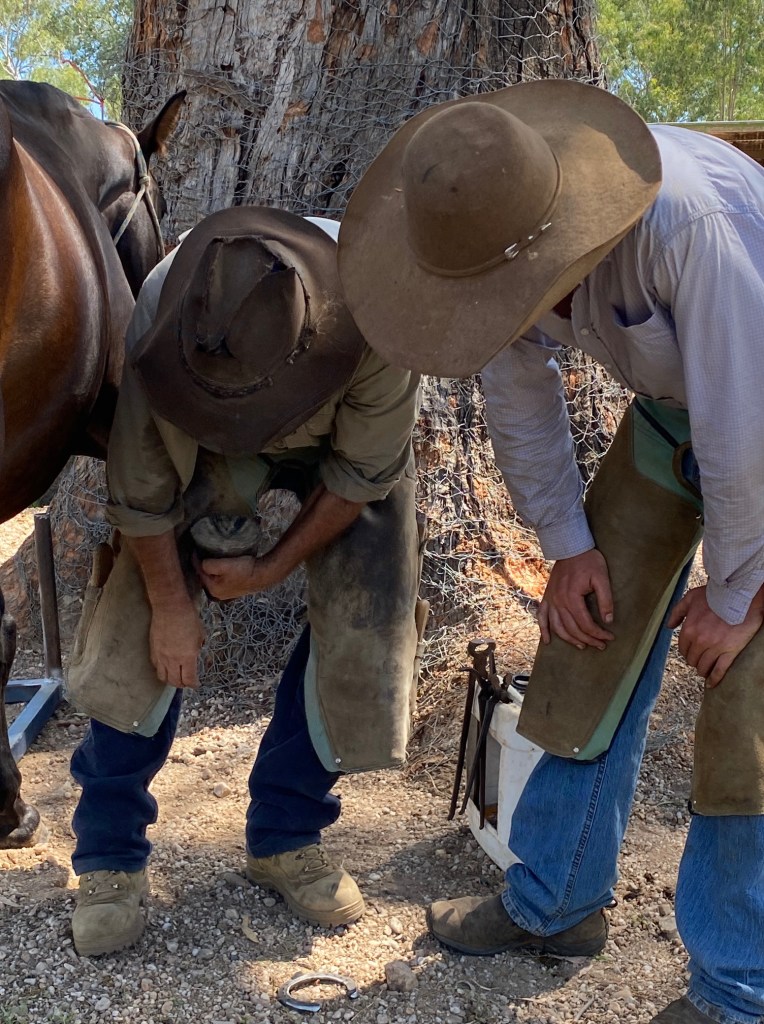
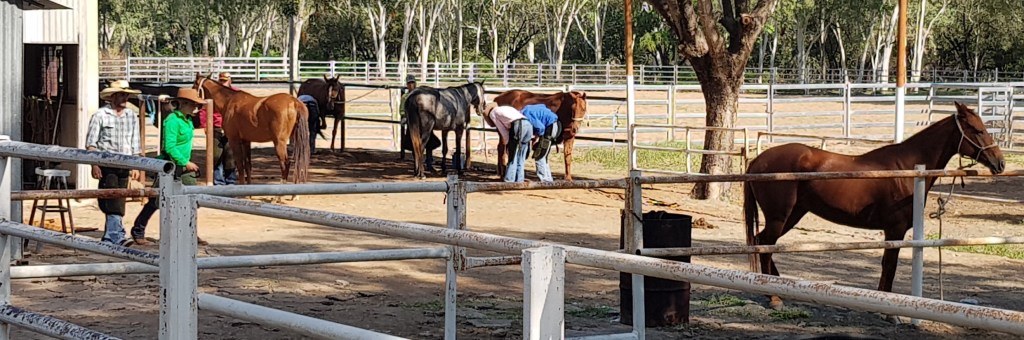
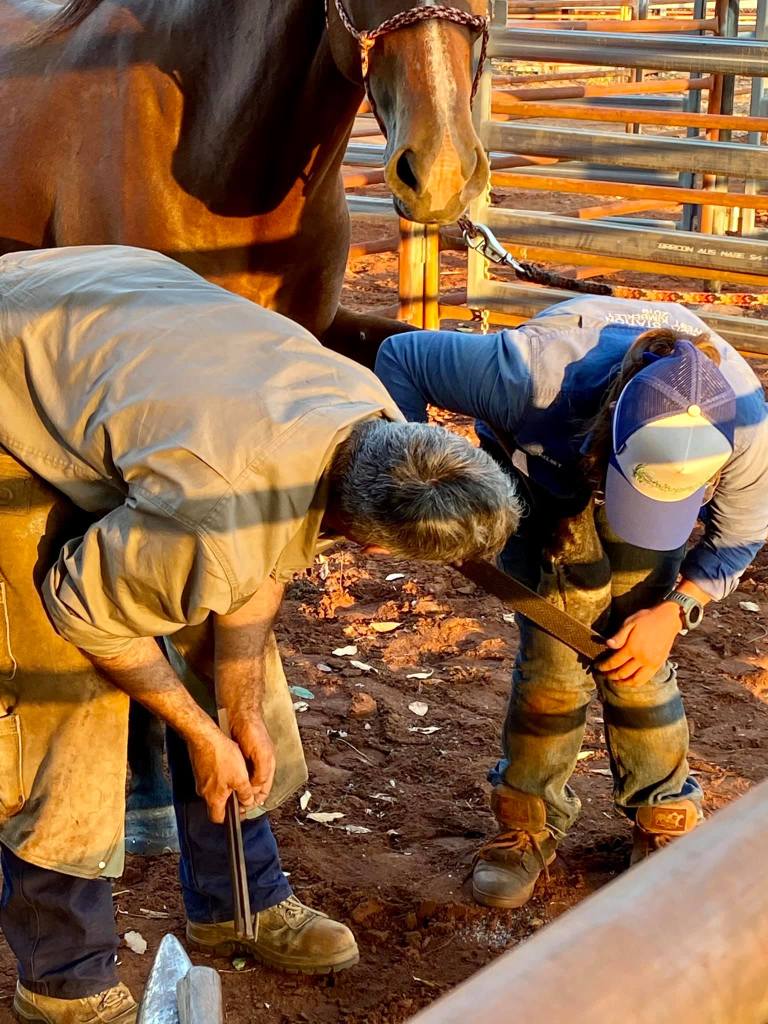
We cover both theory, and hands-on skills in two very full days. Some stations prefer the longer format so that all of their currently active plant horses can be shod under supervision during the school.
Schools are aimed at increasing the efficiency of station staff – becoming quicker, while at the same time doing a better job.
Participants achieve this by:
- learning how to recognise patterns found in feet in order to simplify the trimming process; thereby removing the mystery and guesswork from shoe shaping.
- working with a plan that allows for self-evaluation and improvement of successive shoeing jobs.
There is an emphasis placed on soundness of the horses and safety of people and horses through good horsemanship.

Having worked in stock camps myself, I am mindful of the need for this job to be done confidently and quickly throughout the mustering season, but also have seen that it is a job that many station-hands dread. This is mostly due to confusion brought about by a lack of structured training, and the prevalence of disjointed and often incorrect information. Without a clear plan, people are reluctant to get stuck into the task.
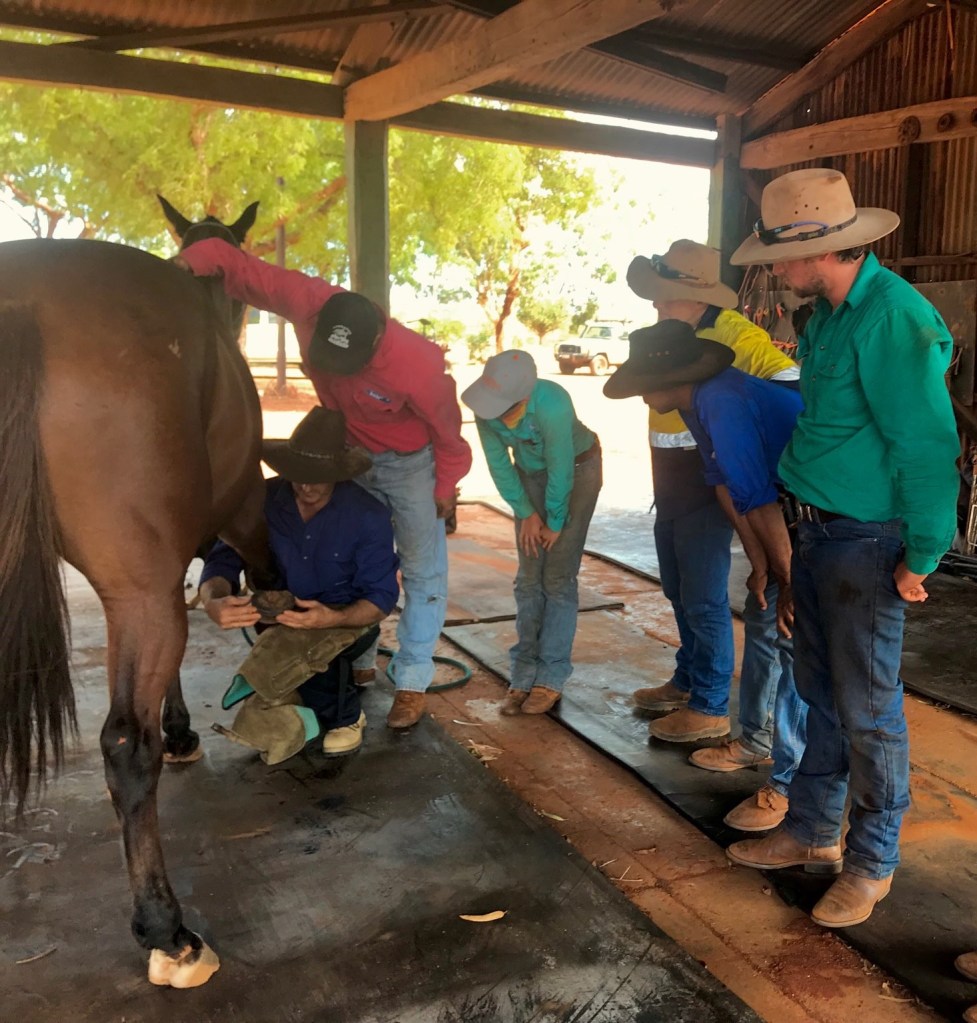
When we simplify and bring some structure to the process, there is a lot less head-scratching, the job gets done quicker and becomes easier.
I have had station-hands send me messages throughout the season reporting in on successive shoeings and stating they are looking forward to the next time they will be shoeing the mob in order to see even more progress in their skills.
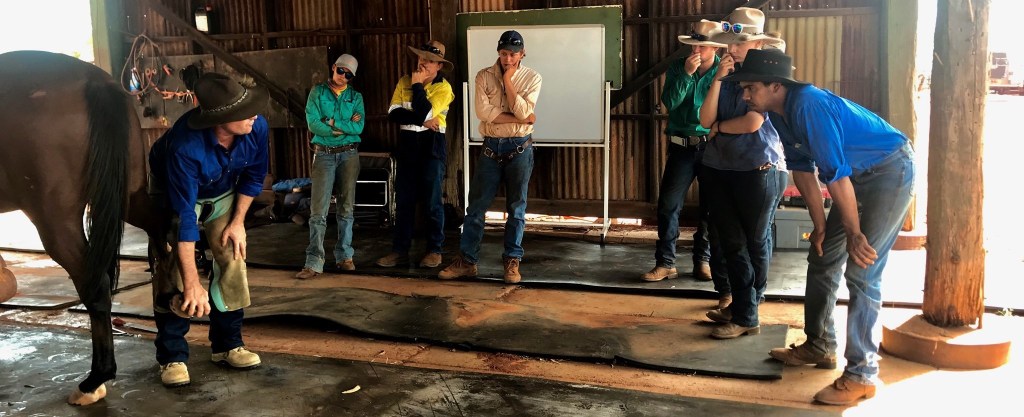
There are definitely mutual benefits, with the stations reporting improvement in both the way the horses are being shod, and the confidence and efficiency gained by staff at successive shoeings; and for me being able to travel this beautiful country to visit the stations and do something I enjoy immensely – sharing knowledge and experience, and taking care of our loyal friend, the horse.
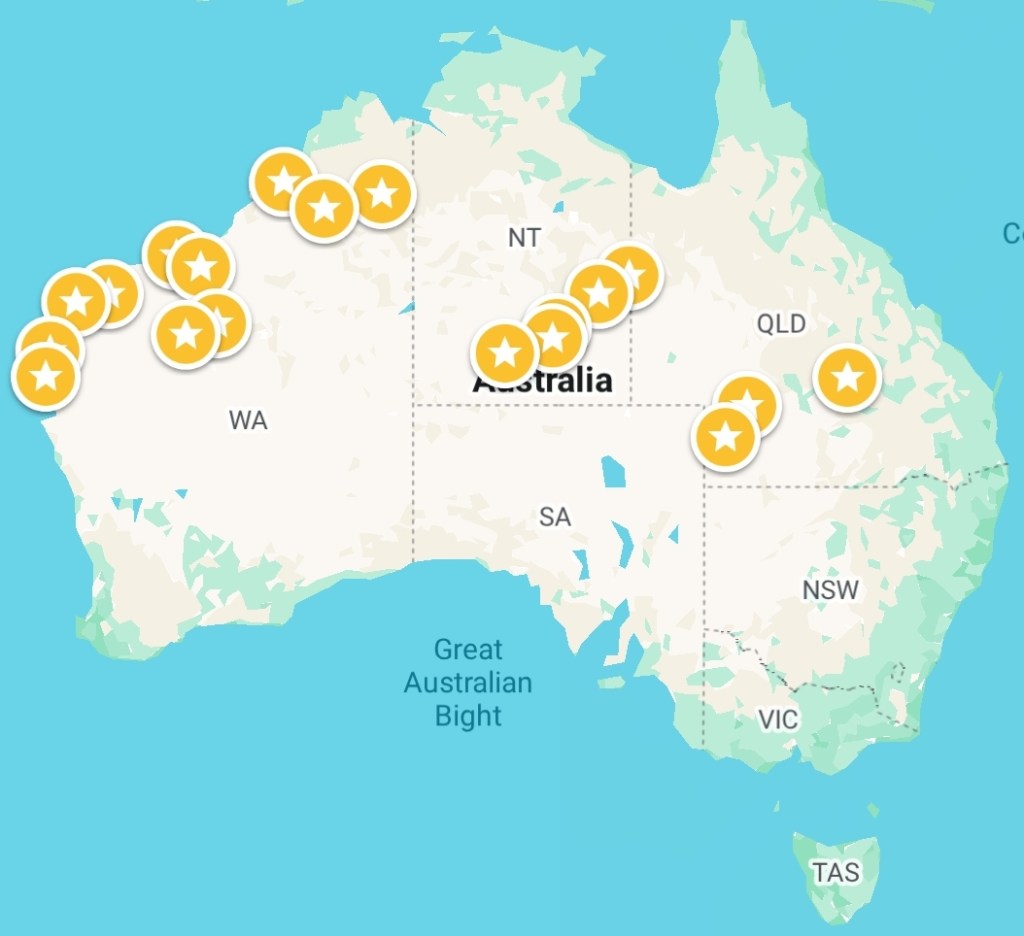
Map showing stations I have visited and stations who have sent staff to my schools.
Currently I visit stations between February and September each year, doing my best to work around station commitments, regional wet seasons etc. and have room to add more stations to the schedule.
Daily rate for Station Shoeing Schools is $1200 +GST plus travel fee (~$500).
References available upon request.
“Gday Adrian, just thought I would drop you a note to say everyone here has got a few horses under their belt after your school and are shoeing real well including myself” – Station Manager, Pilbara 2018
 Maybe Street Forge